
Hands to Light
Light begins from hands
A creative practice of shaping, reflecting, and gently making sense of what lives within.
About Hands to Light
Hands to Light began from a quiet need - to create, even when words were not enough.
In still moments, creation became a way to breathe again - to fold, trace, mold, and piece together what felt scattered,
Over time, those small gestures became light - a gentle reminder that healing begins, quite literally, from the hands.
Our work is rooted in expressive arts and design psychology, and shaped by a simple, human idea: when we give form to what we feel, we begin to understand it. This is the heart of our emotional visual mapping method - a hands-led practice that turns experiences into shapes, loops, marks, and quiet movements you can return to.
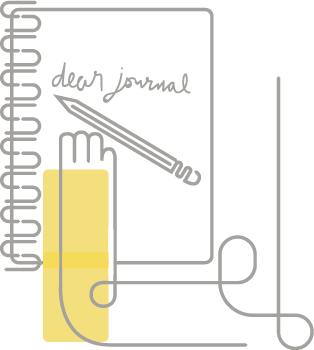
Through tactile prompts, reflective journalling, and gentle mapping across past, present, and future, we help people see their inner world as something that can be explored, tended, and carried with more clarity.
Nothing here is abstract. Healing begins in motion, in texture, in touch - in the quiet act of making that reminds us we're still here, still becoming.


Research Foundations
Our emotional visual mapping method is grounded in research from expressive arts, design psychology, and embodied reflection - fields that show how making, touching, and arranging form can help people understand and regulate their inner world.
Creativity as self-reflection
Studies show that creative expression and writing reduce stress and support emotional well-being (Kaimal et al., 2016; Pennebaker & Smyth, 2016).
Using the hands engages sensory and motor regions of the brain, helping emotions move into form rather than stay trapped in thought (Zeki, 2009; Malchiodi, 2015).
This is why mapping with marks shapes, or simple tactile gestures supports clarity - the body helps carry what the mind struggles to hold alone.
Reflection across time
Our loop-based approach draws from narrative identity theory, which shows that making sense of lived experience through story-building strengthens resilience and meaning(McAdams, 2001)
Moving between past, present and future supports cognitive reappraisal(Gross, 2015) - the ability to see situations from new angles.
The loops offer structure without pressure, making reflection feel approachable and grounded.
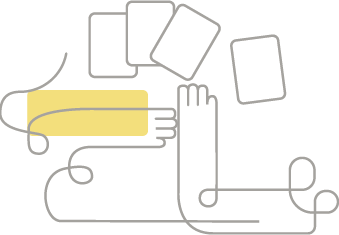
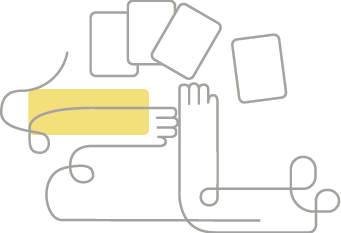
Working with cards, cutouts, and physical prompts supports embodied cognition - the idea that thinking is shaped by movement(Wilson, 2002).
Selecting, placing, and rearranging pieces externalizes emotion into something visible and manageable. Structured tools reduce overwhelm and decision fatigue (Iyengar & Lepper, 2000), making reflection feel safe and guided.
Tactile tools
Mindfulness research shows that brief pauses reduce rumination and help insights settle (Kabat-Zinn, 2003; Di Stefano et al., 2014). Simple moments of breath or stillness help the nervous system return to calm(Jerath et al., 2015).
This is why transition phrases and gentle shifts in the mapping process matter - they give the body and mind a chance to integrate.
Transitions and pauses
Together, these studies affirm what the hands alway know:
healing becomes possible when we can see and touch our inner world - when emotion moves into form, and form helps us find our way back to ourselves.
Mapping feelings and key figures
Emotion labeling helps reduce emotional intensity(Lieberman et al., 2007).
Mapping relationships and important people supports relational clarity and boundary-setting(Carter & McGoldrick, 2005).
These elements anchor the map in lived experience, giving context, weight, and shape to what the user is exploring.
Offerings (coming soon)
Gentle Practices to Make Light Begin
To Play - for those who need a softer way in.
Hands-based, game-like prompts that turn emotion into simple marks, shapes, and visual maps - playful enough to lower the pressure, structured enough to help you see what's underneath. A creative doorway into understanding yourself without forcing words.
To Reflect - for those who want deeper clarity.
Guided journaling and tactile reflection tools that help you map your past, steady your present, and imagine your future. A quiet space to notice patterns, uncover meaning, and meet yourself with honesty and care.
To Gather - for those who want to share the experience.
Future workshops and community practices where we explore the emotional visual mapping method together - through making, movement, and conversation. A place to be held, witnessed, and gently guided through creative self-discovery.
Connect
Reach out to share your story
© 2025. All rights reserved.